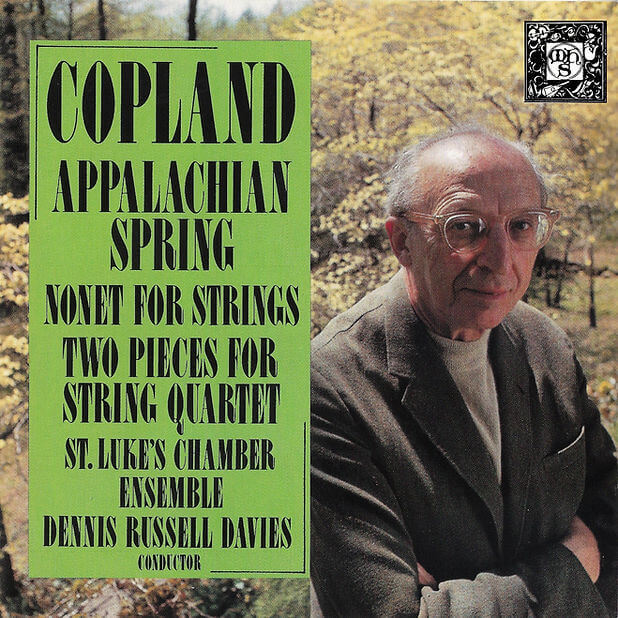
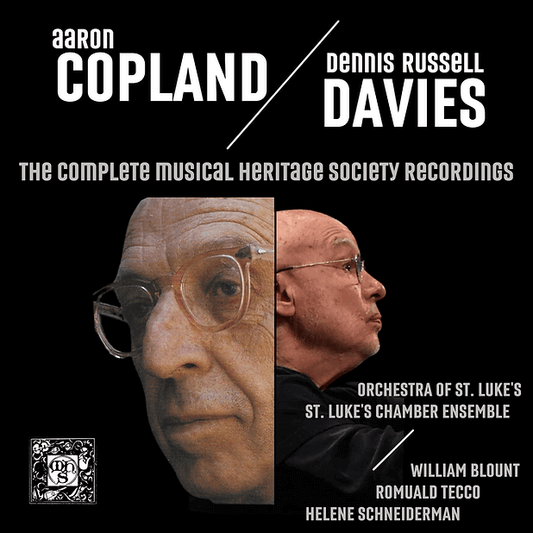
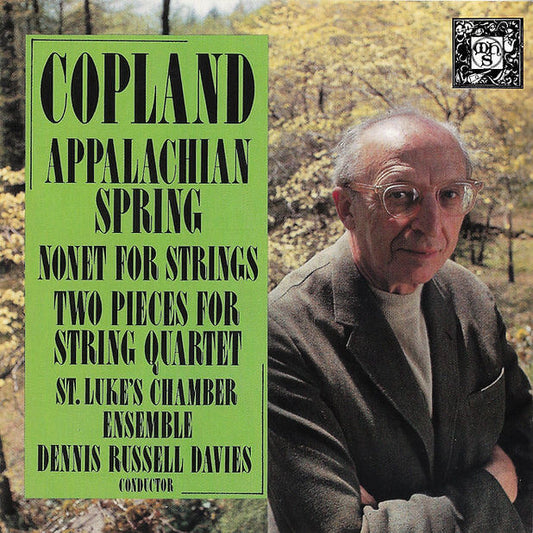
This recording features not only Aaron Copland’s most famous work, the ballet Appalachian Spring, but also comparatively unknown compositions from both the beginning and the end of his career. In chronological order: The Rondino and Lento Molto date from the 1920s, years at once following Copland's studies in Paris with the nonpareil French pedagogue Nadia Boulanger...In Appalachian Spring, Copland, a Brooklyn boy who had never even visited the Appalachians, created an unforgettable evocation. Within two years of its first performance (on October 30, 1944, at the Library of Congress) Appalachian Spring went determinedly and, one presumes, permanently, into the standard repertory. Copland and the modern dance genius Martha Graham had long considered collaborating on a stage work. The late Elizabeth Sprague Coolidge finally brought them together with a commission to create a ballet for the annual fall festival of the Coolidge Foundation in Washington. Graham chose the title, borrowing it from the heading of one of Hart Crane’s poems. The scenario is a simple presentation of a pioneer housewarming party in the Appalachian mountains for a young married couple-to-be. It is divided into eight scenes. I. Very Slowly-The Introduction of the Characters. II. Sudden Burst of Unison Strings, marking the beginning of the action. II. Moderate (Duo for the Bride and her Intended). IV. Quite Fast (The Revivalist and his Flock). V Still Faster (Solo Dance of the Bride) VI. Very Slowly (as at first). VII Calm and Flowing (Scenes of Daily Activity for Bride and her Farmer-Husband), containing variations on a Shaker hymn, “Tis A Gift to Be Simple” VIII. Moderate (Coda)