
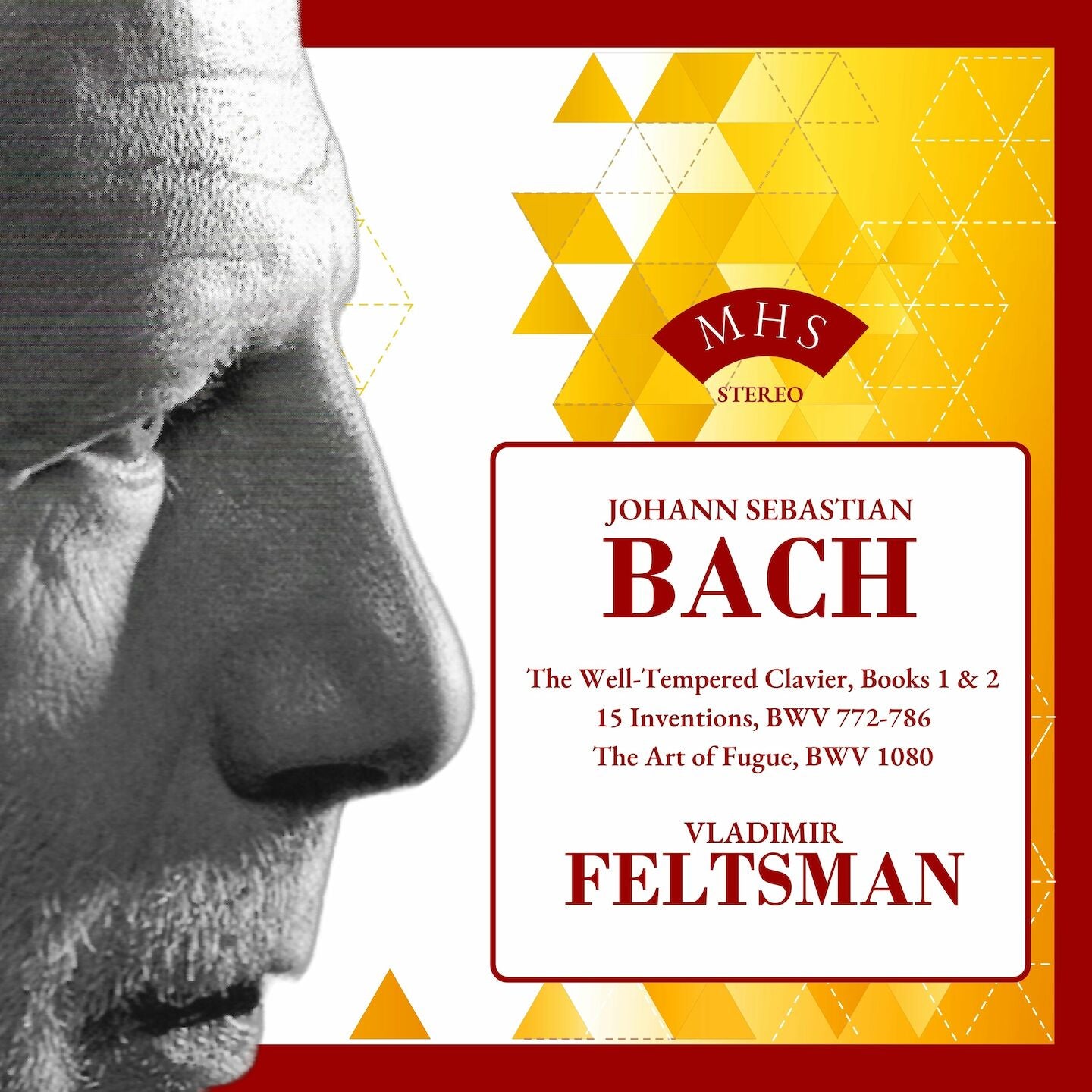
In Tim Page’s short but conside notes for Vladimir Feltsman’s recording of “The Well-Tempered Clavier” , he makes many strong points about the work itself. He adds a good bit of fun to read fluff about how unassailable The Well-Tempered Clavier has become in the overall canon of music - the passage of time has seemed to only enhance this work’s strength as a true monolithic slab of bedrock musical genius.
My writing has to start with a point he makes in quoting another scholar in the art of Bach’s works - Christoph Wolff. Wolff makes the point that The Well-Tempered Clavier, Book II is a well-intentioned but not very successful follow up to the all mighty Book I.
Sorry Book II but you’re “Jaws 2” (or Jaws II)...this time it’s personal...or so it seems. Or, in Wolff’s own words “a glorious after-thought” to the stupendous Book I.
Ah, the younger brother...the less popular middle child...the poor neglected Book II. And it truly is - there are 60% fewer recordings of Book II than Book I, a damning statistic in the world of Bach recording. A few have carried the rock up the hill - no one has done it twice, by the way, at least in the studio.
And so naturally I suggest this is exactly where you should start if you join MHS, and get a free membership that would allow you to sign up, download this selection for free and then try on this recording for yourself.
Let’s start with the obvious - Book II is not Book I. This isn’t Godfather 2 v Godfather 1, (editors note: well...maybe the scenes with DeNiro) or is The Empire Strikes Back better than A New Hope? (editors note: it isn’t)
However, I wouldn’t ignore Book II. Even a pianist with the talents of Vladimir Feltsman can’t quite paste over the cracks in Book II, which can seem to plod along, slighly adrift. Certainly your older brother Book I never had those problems, Book II.
But 20 years had passed since Book I and Bach had a lot more kids since then, as well as wrote a few Passions and cantatas and organ works, so maybe he just wasn’t feeling it, and he was playing out the string waiting for his retirement pension to kick in.
Since we’re in the mood to rewrite how Bach is perceived, I’m going also take a shot and have some pity on old Art of Fugue (or sometimes written as the very controversial Art of The Fugue). Let’s recast this - although this is the kind of work that makes hair stand on end in excitement for about 10 people in the world (10 really cool people, of course).
If Bach were in a record label’s office today, there’d be someone like me, suggesting that possible we could spin the narrative on this new work, Art’s Fugue, or whatever, into “Goldberg II: Contrapunctus”, with Contrapunctus being some forsaken creature come back like an avenging Odyssus, ready to wreak havoc on themes everywhere by tearing them apart and putting them back together backwards and sideways...
The many contrapunctus that you see in the track listing are simply the theme, and Bach constructs and reconstructs the theme over and over again. And for those who love music on paper, this work has a wow factor that’s hard to deny. For those who listen to music, it’s a LOT less compelling.
And a last note on Two Part Inventions -used a million years ago on a TV commercial for Tandy, I’ve always loved these works. But Feltsman dismisses them as childs play...but hey, who doesn’t like a jelly bean every once in a while.

Performers
00:00
/
00:00
Also Available from EXCLUSIVE: OUR MAIN SELECTIONS
-
EXCLUSIVE - MAIN SELECTION
Vivaldi: La Cetra, Op. 9 - Orchestra of Accademia Monteve...
ExploreRegular price $29.99 USDRegular priceUnit price per -
EXCLUSIVE - MAIN SELECTION
Mozart: 8 Great Piano Concertos
ExploreRegular price $29.99 USDRegular priceUnit price per -
EXCLUSIVE - MAIN SELECTION
Brahms: Chamber, Orchestral and Piano Works
ExploreRegular price $29.99 USDRegular priceUnit price per -
EXCLUSIVE - MAIN SELECTION
Four Centuries of Guitar - Ernesto Bitetti
ExploreRegular price $29.99 USDRegular priceUnit price per -
EXCLUSIVE - MAIN SELECTION
The Art of Romance (A MHS Main Selection)
ExploreRegular price $29.99 USDRegular priceUnit price per -
EXCLUSIVE - MAIN SELECTION
Mozart: Ten Great Piano Sonatas - Artur Balsam
ExploreRegular price $29.99 USDRegular priceUnit price per -
MAIN SELECTION
English Choral Music for The Christmas Season
ExploreRegular price $29.99 USDRegular priceUnit price per -
EXCLUSIVE - MAIN SELECTION
HARVARD GLEE CLUB: The Complete Musical Heritage Society ...
ExploreRegular price $29.99 USDRegular priceUnit price per -
MAIN SELECTION
Beethoven: The Unknown Beethoven (An MHS Main Selection)
ExploreRegular price $29.99 USDRegular priceUnit price per$29.99 USDSale price $29.99 USD -
MHS EXCLUSIVE DIGITAL DOWNLOAD
Chopin: Works for Solo Piano (An MHS Main Selection)
ExploreRegular price $29.99 USDRegular priceUnit price per$29.99 USDSale price $29.99 USD -
MAIN SELECTION
Handel: Orchestral and Chamber Music - An MHS Main Selection
ExploreRegular price $29.99 USDRegular priceUnit price per$29.99 USDSale price $29.99 USD -
EXCLUSIVE - MAIN SELECTION
Haydn: Ten Named Symphonies - Ernst Marzendorfer, Vienna ...
ExploreRegular price $29.99 USDRegular priceUnit price per$29.99 USDSale price $29.99 USD


