Mine was the privilege to create the first-ever Festival of Neglected Romantic Music (at Butler University, Indianapolis). What an exciting project it was! During my decade as its director, the Festival explored and repre'miered dozens and dozens of big works by such then-unplayed composers as Alkan, Bourgault-Ducoudray, David, Dreyschock, Ernst, Guiraud, Henselt, Herz, Joachim, Moszkowski, Napravnik, Paderewski, Pierne, Raff, Rheinberger, Rombert, Rubinstein, Servais, Sgambati, Spohr, Thalberg, Wieniawski, and many others. The one that almost got away was Hummel.
Pupil of Haydn, Mozart, Clementi, and Beethoven and teacher of Mendelssohn, Hiller, Henselt, and Thalberg, Hummel was a key figure in the development of romanticism. He created the most profuse and elaborate keyboard idiom before Liszt, set the stage for Chopin's jewel-like ornamentation and be! canto melodic lines, wrote the era's "bible" on piano technique, and composed reams of elegant, sometimes astonishingly brilliant music...
"Elaboration," Bryce Morrison tells us, "rather than classical economy was Hummel's aim, and his execution of a novel profusion of ornaments was viewed with envy and disbelief." --Frank Cooper, MHS Review, 1987
To disappear - such a fate for anyone. Consider this fate for a composer, whose job seems to be to alter our universes for a moment, and create an atmosphere that we can remember in our own way - respectfully, rapturously, however. They toil, they produce and then we forget.
While researching other works for an earlier issue of The Review this year, I stumbled upon the concept that one of the reasons that the works of composers of the Baroque era didn’t make much effort to retain scores was that the music wasn’t meant to be performed much after the initial performance. I don’t know how the composers felt about that...but it actually sounded logical.
I write now more about this recording as well as the music of Hummel. This 5 LP set, 3 hours and 36 minutes long has been out of print, as best I can tell, for over 50 years. Many reasons I suppose...I can explain why the recording was unreleased. But I found Hummel to be an interesting case. In a world where there’s multiple recordings of everyone’s everything in classical music, there’s few recordings of many of these works.
Play “drop the needle” (oh, how old I feel when I say that) and you can find moments of tremendous beauty that makes you feel as if you’ve discovered Beethoven and Mozart’s musical sibling. Hummel then drifts into habits a music student of any caliber would have avoided...so this will be a treasure hunt, but one a music lover should definitely take!
Performers

00:00
/
00:00
Also Available from HANS KANN: THE MUSICAL HERITAGE SOCIETY RECORDINGS
-
Members Save 50% DIGITAL DOWNLOAD with LINER NOTES
BOIELDIEU: THE SIX PIANO SONATAS - HANS KANN
ExploreRegular price $9.99 USDRegular priceUnit price per$9.99 USDSale price $9.99 USD -
Members Save 50% DIGITAL DOWNLOAD with LINER NOTES
Godowsky: Piano Music - Hans Kann
ExploreRegular price $9.99 USDRegular priceUnit price per -
Members Save 50% DIGITAL DOWNLOAD with LINER NOTES
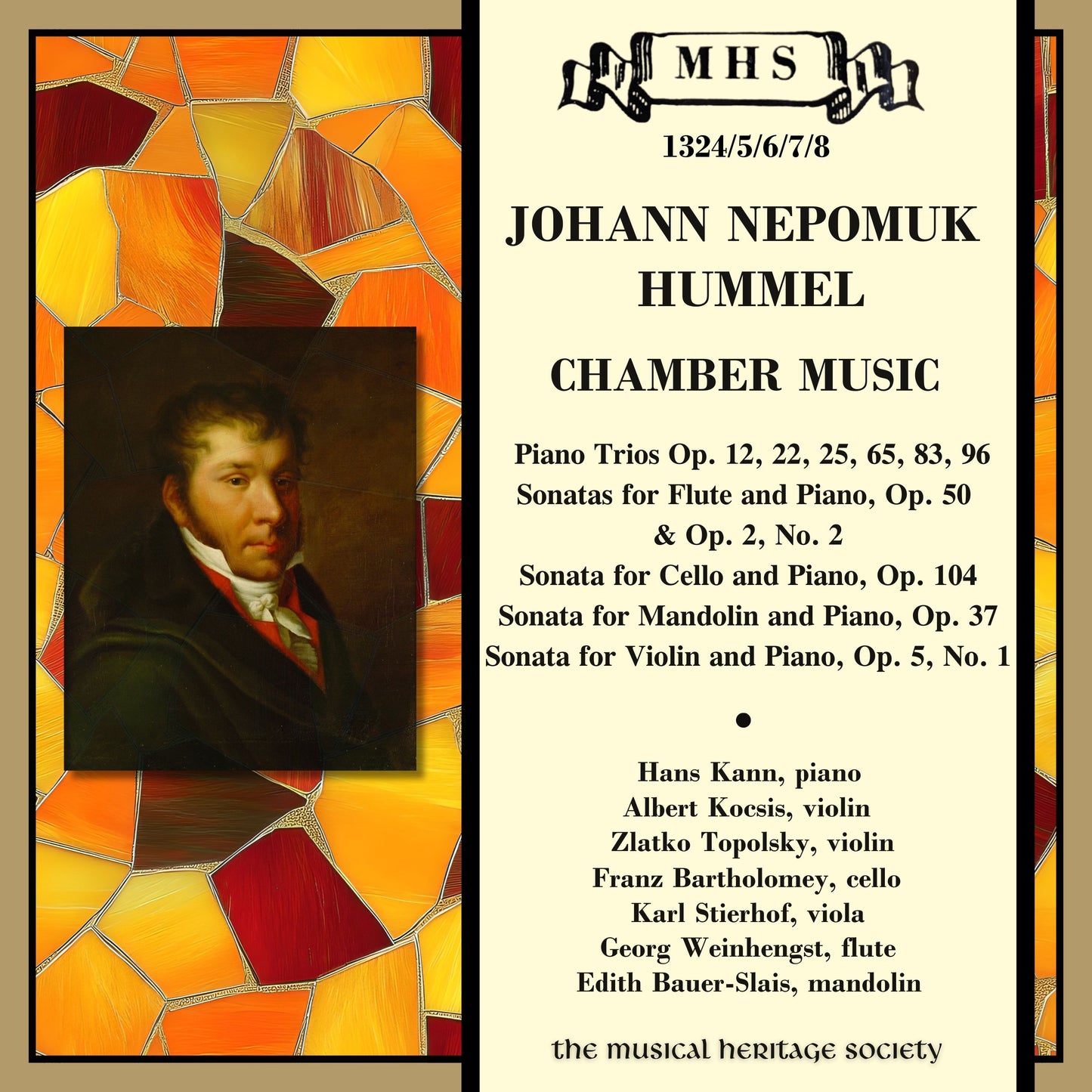
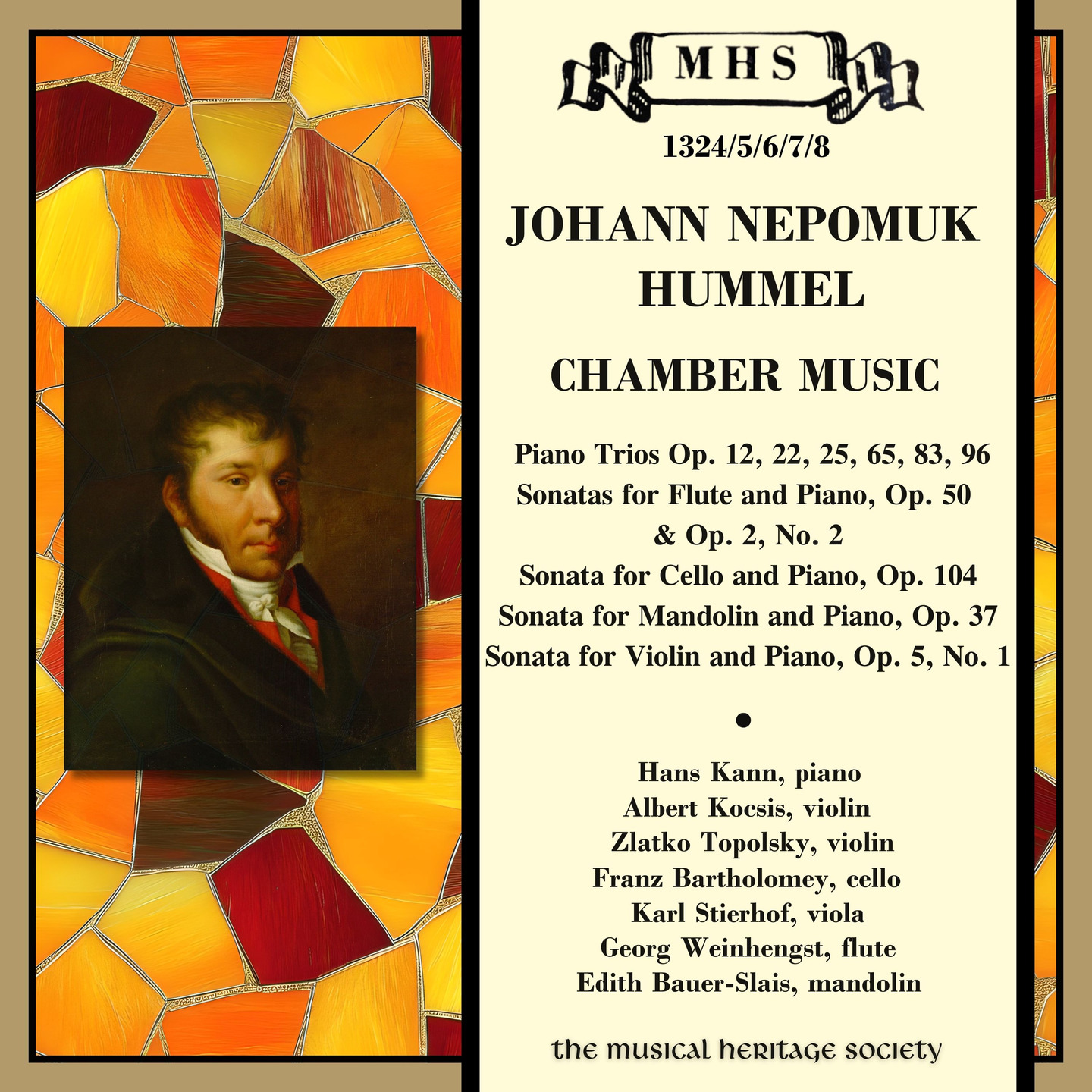
HUMMEL: CHAMBER MUSIC
ExploreRegular price $9.99 USDRegular priceUnit price per$9.99 USDSale price $9.99 USD -
Members Save 50% DIGITAL DOWNLOAD with LINER NOTES
Hummel: Piano Music - Hans Kann, fortepiano
ExploreRegular price $7.98 USDRegular priceUnit price per$7.98 USDSale price $7.98 USD -
Members Save 50% DIGITAL DOWNLOAD with LINER NOTES
Russian Piano Music - Hans Kann
ExploreRegular price $9.98 USDRegular priceUnit price per$9.98 USDSale price $9.98 USD -
Members Save 50% DIGITAL DOWNLOAD with LINER NOTES
The Sound of Keyboard Instruments
ExploreRegular price $9.98 USDRegular priceUnit price per$9.98 USDSale price $9.98 USD