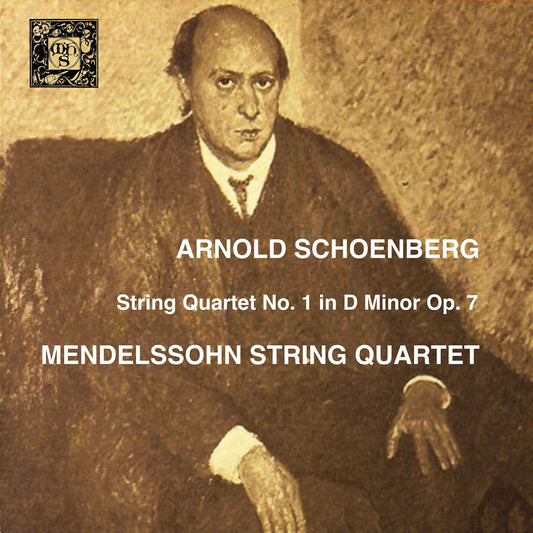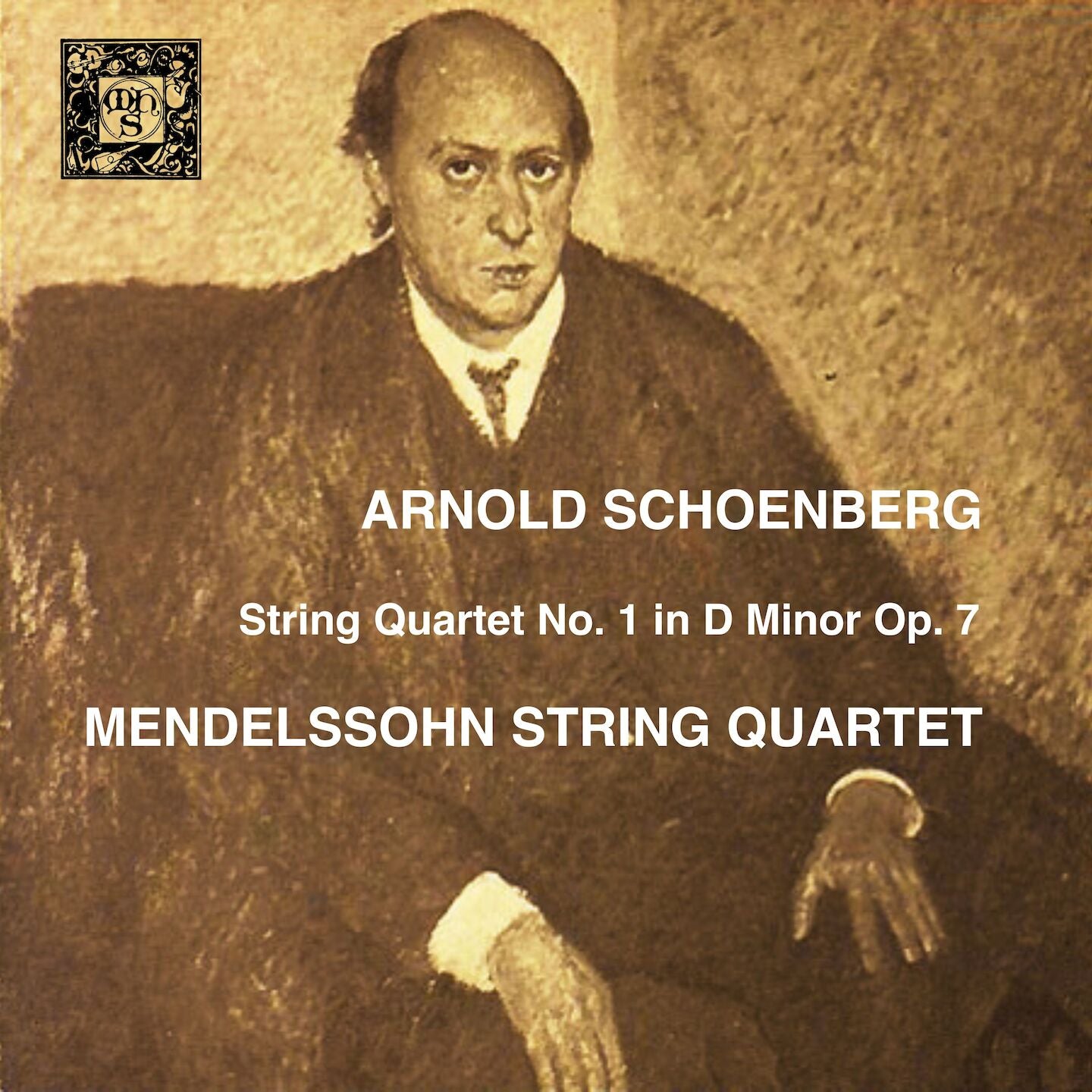
Arnold Schoenberg was well known for his rejection of tonality in music, or " the emancipation of dissonance," as he called it. Even today, much time is spent discussing his 12-tone method, in which each of 12 notes is placed in a hierarchical order that is not harmonically based. Schoenberg composed his four string quartets between the years 1905 and 1936. Each work represents a period in his development: atonality emerges in the Second; 12-tone construction is evident in the Third and Fourth.
The epic First Quartet shows the influence of Strauss and Mahler. Designed to be played without pause, its form is an enormous sonata structure, within which the composer incorporated, as he stated, .. all four characters of the sonata type" (i.e. Allegro, Scherzo-Trio, Adagio, and Rondo). When Mahler heard the work at its first performance in 1907, he said "I don't understand his work, but then, he's young and he may well be right. l'm old and
perhaps I don't have the ear for his music."
Performers
00:00
/
00:00
Also Available from MENDELSSOHN STRING QUARTET: THEIR MUSICAL HERITAGE SOCIETY RECORDINGS
-
Members Save 50% DIGITAL DOWNLOAD
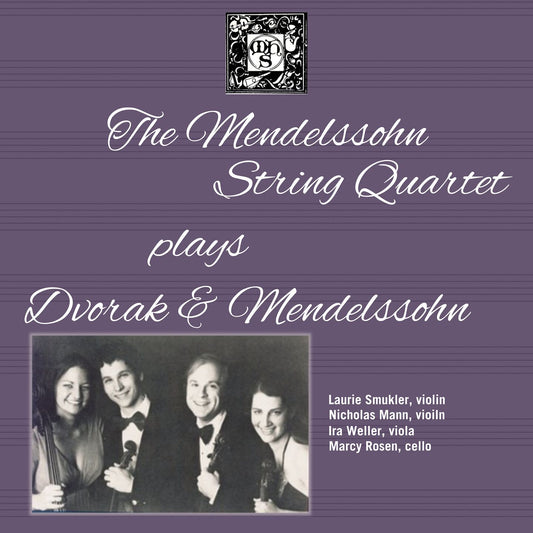
Dvorak & Mendelssohn: Works for String Quartet - Mendelss...
ExploreRegular price $9.99 USDRegular priceUnit price per -
Members Save 50% DIGITAL DOWNLOAD with LINER NOTES
Mozart: Clarinet Quintet (arr. for basset clarinet); von ...
ExploreRegular price $9.98 USDRegular priceUnit price per$9.99 USDSale price $9.98 USDSale -
Members Save 50% MHS EXCLUSIVE DIGITAL DOWNLOAD
Schoenberg: String Quartet No. 1 in D Minor, Op. 7 - Mend...
ExploreRegular price $9.99 USDRegular priceUnit price per