OUR COMPLETE COLLECTION OF MHS & JHS RECORDINGS

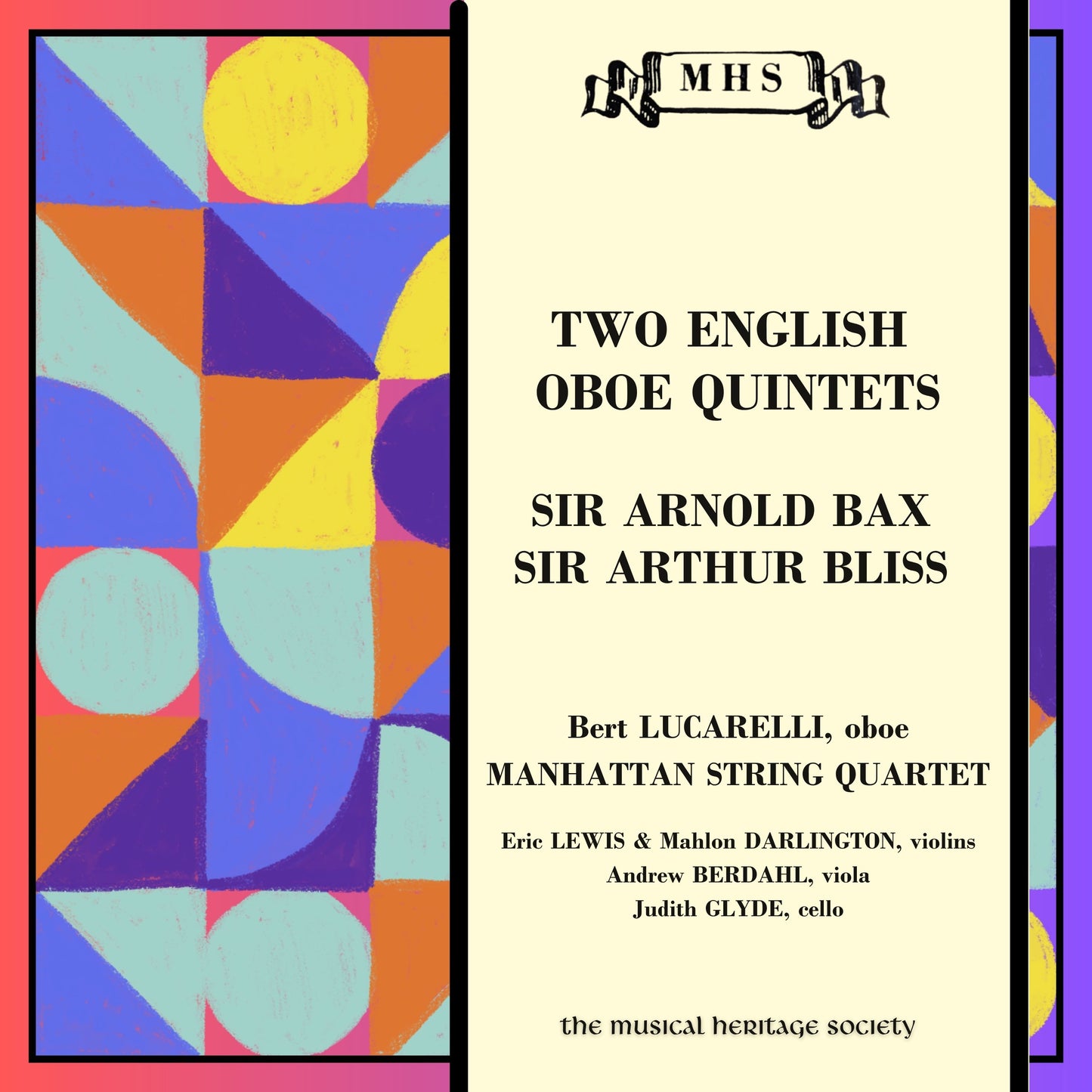
Two English Oboe Quintets: Bax and Bliss Oboe Quintets - Bert Locarelli, Manhattan String Quartet

Two English Oboe Quintets: Bax and Bliss Oboe Quintets - Bert Locarelli, Manhattan String Quartet

Unlock Exclusive Member Benefits:

  • First Month is a Free Trial

  • Get a Free Digital Boxed Set Every Month

  • Save On Classical, Jazz, Pop and World Music CDs, LPs, DVDs and Blu-Rays at Our Partner Store, ClassicSelect World

  • $$$ Off Your Purchases Starting Now

  • And Access The Musical Heritage Review Magazine Archives - Explore Music with Hundreds of Essays, Articles and Reviews

  • Learn about MEMBERSHIP

Enjoy your Exclusive Member Benefits:

  • Save At Least 50% on Sale Items at Our Store

  • Monthly Discounts at Our Partner Store, ClassicSelect World

  • Read The Musical Heritage Review and The Archives

  • Get Your Free Digital "Main Selection"

  • Click Here To Learn about MEMBERSHIP

AVAILABLE ON MAJOR STREAMING SERVICES

If You See This Icon...

  • This Title Is Available Only On Streaming Services.
  • Explore! Read About This Title in The Musical Heritage Review.
  • If You See This, Members Save 50% or More on This Recording
BLISS: The Oboe Quintet owed its existence to an invitation from that great patron of chamber music, Mrs. Elizabeth Sprague Coolidge, who wanted a new work for Leon Goossens to play at one of her International Festivals. The first performance took place in Venice in September, 1927, with Leon Goossens and the Venetian String Quartet. I particularly recall the pleasure of the rehearsals which took place on the Lido and to which we went by gondola from our hotel in Venice...BAX: The Quintet for Oboe and Strings was composed in 1923. There is a constant melodic flow about the work, the texture and harmony of which seem to grow one from the other. The thematic content of the first movement, in fact, grows out of the opening melodic and rhythmic ideas, first played by the string quartet, then as a kind of cadenza played by the oboe. The second movement, is almost the musical equivalent of the long Irish [or Gaelic] heroic ballads Bax was so fond of. The last movement is in the nature of an Irish reel, in the middle of which Bax introduces, [as a countermelody], what appears to be a bona-fide folk-song. The rhythmic and melodic counterpoint in most of this fine movement gives it a vitality and purposefulness not often encountered in present-day compositions.
View full details

Also Available from The OUR COMPLETE COLLECTION OF MHS & JHS RECORDINGS